Cover reveal—and, how you teach yourself
Art thinks about and utilizes control, but it is not control. I am sure art is surrendering to a reality in which we don’t determine what made us. That is absolutely terrifying. Our old hurts often make us offputting or illegible to others and we canonize that if we dare put it in art.


Big day! The Secret Lives of Immortals has a cover!
There are many days where I’m hyperfocused on the work and writing. While I was, and continue to be, absolutely thrilled to be publishing a book, the actual book as a distributable object felt like a distant dream state.
With the cover comes reality: this will soon be a real object we can literally hold. This world I envisioned, carved out, and honed with a stellar team will exist between two real physical covers—or on servers and headphones!
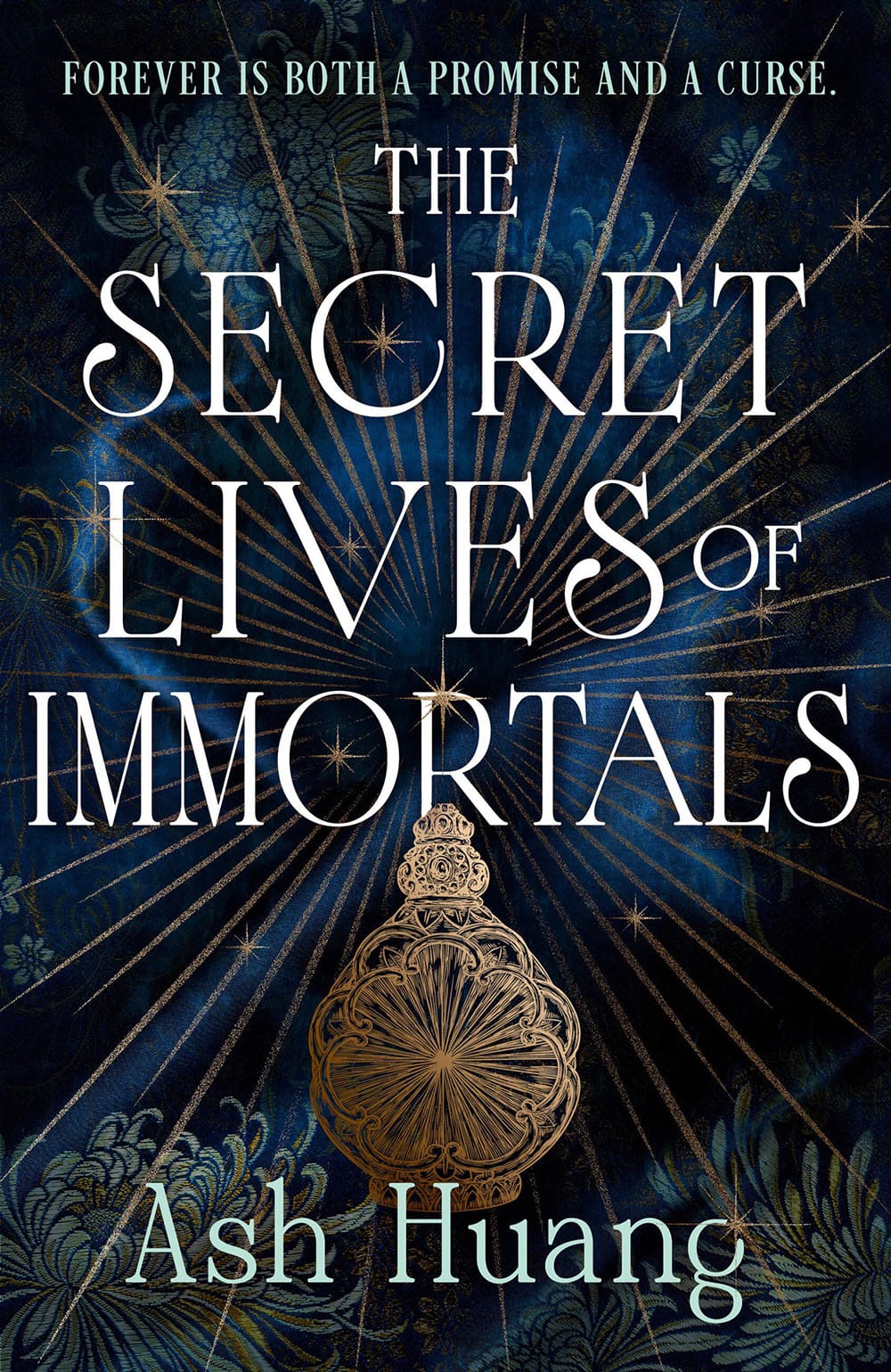
Many eternal thanks to designer Ella Garrett at LBBG—and, everyone else at Orbit who is working on packaging up this universe and working to tell people about it.
And with that! The Secret Lives of Immortals is up for pre-order. It will be out on March 02, 2027. And, if you’re in the US and you are a Barnes & Noble member, you can get 25% off the paperback, e-book, or audiobook with the code PREORDER25. This applies to many other preorders, so fill those carts and support the arts.
There are a few other recommendations on the bottom of this newsletter!
For other online retailers, pop on over to Redhook directly and find your fav shop.
I have a couple fun additional hijinks planned over the next few months that I’m so excited to share with you. Stay tuned for that.
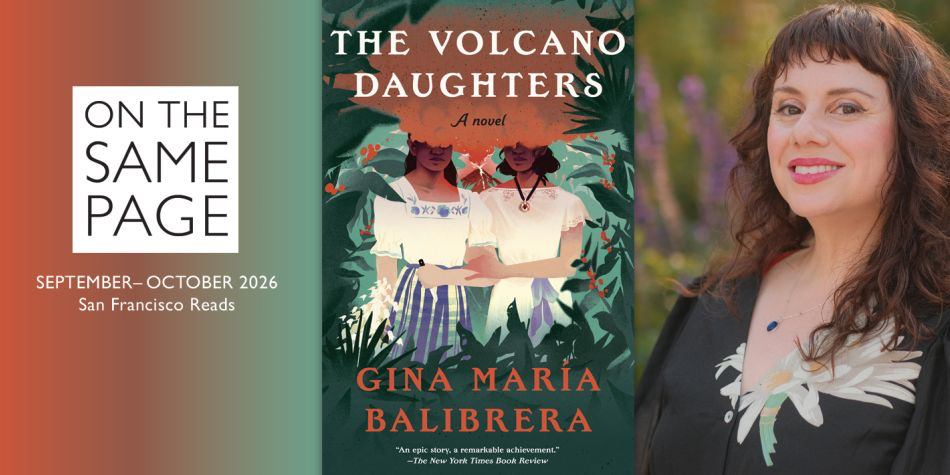
On October 4, I will be in conversation with talented and powerful literary angel, Gina María Balibrera, at the Main Branch of the San Francisco Public Library. Surely you have read The Volcano Daughters already, maybe twice, and felt the transportative, bold, heartbreaking and atmospheric magic of it??? Surely??? And surely you will come to hear Gina’s insights and witness the gentle-brave awesomeness of her powerful intellect? 100 Larkin Street! Koret Auditorium! 2pm!

Additionally, I will be at Flights of Foundry talking the ear off of anyone around me, via a whole lot of history panels and dialogs. Here’s the list and times; let me know if you’re paneling as well! Or, any you have your eye on.
Immortality and the Aunties: Living forever in the diaspora
Vampirism, curses, or simple dream logic—no matter how or when a character gets stuck with eternal life, we’re universally fascinated by the possibilities in living forever. And, the metaphors within. How is the cultural fantasy of immortality complicated by being a member of a diaspora? With Ash Huang, Jeané D. Ridges. Sep 18, 2pm PST / 16:00 UTC-5
Finding and Using the Juicy Tidbits
Forget the Tiffany problem. Sometimes your historical research leads you to weird, wild facts you just have to include in your work. History researchers get together to share some of their best finds and their tips for how to make sure they make it into the project. With Sonia Focke, E.M. White, Ash Huang, and Celia Lake moderating. Sep 19, 11am PST / 13:00 UTC-5
Down the Rabbit Hole: Research for Historical Fiction
Let's talk favorite tools, where to go to get results not poisoned by AI hallucinations, and the things you wish you'd known when first getting into historical fiction. With Dawn Vogel, Richard H Moon, Ash Huang, L.S. Johnson, and Marie Brennan moderating. Sep 19, 1pm PST / 15:00 UTC-5
Well, Actually: The Joys and Pitfalls of Writing Historically
Do you want to incorporate more history into your work? Are you daunted by the sheer magnitude of humanity’s entire extant archive? Is the idea of a reader’s ‘well, actually…’ giving you the shivers? Join Ash Huang and Rose Ciesla to discuss how we might ensure our historical research is both fun and generative, and how to avoid common pitfalls. From practical traps (opened the ol’ Internet, got sucked down the corgi vortex again) to philosophical ones (how do I interpret texts from harmful tyrants??), we’ll discuss habits and mindsets that are crucial to working from history—especially in an age where AI-generated misinformation runs rampant, and our hallowed searchable Internet stacks are under existential threat. With Ash Huang, Rose Ciesla. Sep 20, 2pm / 16:00 UTC-5
Without further ado, your scheduled pep talk.
You Teach Yourself
I was lovingly crafting a shitpost for the group chat when Guan lobbed in a surprising question (in prep for a class he’s soon teaching). He asked, what would you tell a beginner about writing a short story?
It threw us for a real loop. We muddled through it. Read a lot, develop your taste, don’t try to do too much, understand that a short story is so very different from a novel.
What’s funny is our group chat began years ago because we were all interested in writing and publishing short stories. When we first came together, we had a few publications between us, but only a precious few. Now we have dozens (many via Guan, hence him teaching a whole ass class about it). It’s been years, but not decades, so it’s fresh in our memory. We talk about short stories and our writing constantly. You’d think we’d be close enough to the experience to have instant, firm opinions.
But it’s only natural we don’t. Because when you really start cooking on short stories—or anything really—you understand learning means you teach yourself, no matter who you study under or the state of your technique.
Part of making any kind of art is the exploration of being someone else and the refuge within that: alternate paths you veered away from, worlds you wished to visit. While some people are extremely talented at escaping whole hog into this illusion making, part of being creative is also wholeheartedly accepting where you come from.
We are what we’ve been: where we grew up, what our family said to us when we were children, the technology and media we were obsessed with; all of these things are specific, happenstance, and/or foisted upon us. So much is not chosen. It is encountered by fate and circumstance.
Part of what makes a generalized all-knowing knowledge base distressing (AI; Reel remixes) is the alluring modern fantasy of appealing to all. Of being universal. Of transcending misunderstandings and hurt and evil, so as to create some sort of utopic thrilling artifact that lifts every viewer into the intended state of momentary delight. It’s the illusion of control, in a media sense.
But it’s also the mirage that we can build ourselves so ardently into something lovable and legible, that we need not fully understand what happened to us. Why focus on a past that doesn’t serve and delight?
Art thinks about control, utilizes control, but I do not think it is control. The older I get, the more I am sure art is surrender, and surrendering to a reality in which we don’t usually get to determine what made us. That is absolutely terrifying. Our old hurts often make us offputting or illegible to others in real life, and thus, we canonize that if we dare put it in art.
But it also makes us real. When we talk about spark in the work, that very potential for illegibility is the spark. It is a lens into our reality, even as our work spins fantasies that defy fact and physics.
Our work is both truth and promise. It is a dedicated spectacle that tells you, the viewer, we will earn your trust if you enfold yourself into this experience. Because despite any flashing lights or charismatic villainy or pops of perfumed air, we are trying to show you what the world made of us; something meaningful and real.
In school we are often told, we are learning how to learn. Making art is honoring or fighting what has made you, squaring up with your obsessions, and learning to have faith in the process. To get what you need, to finish what you started. What happened to you matters. It matters so much.
This is why there is no syllabus to writing a good story. Yes, you can learn to be technically legible to different audiences, to be efficient with your words, to use mainstream grammar, to utilize specific color contrasts. There do exist syllables for all of those things.
However, to get at the spark, you will always have to build your own framework; hone your own intuition. It’s what will keep you craving the blank page. You have to get something more out of the work than mere clarity. You have to get more than the trophy of publication, or the dopamine hit of a stranger’s Like.
As for actual advice, I’m rather partial to Premee Mohammed’s response to Guan’s Bluesky, which was one of the many replies and quote posts that might prove illuminating.
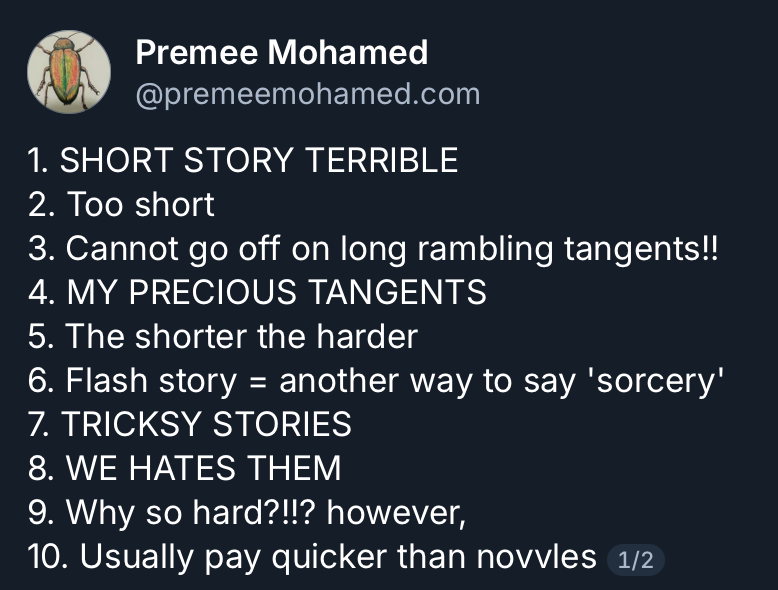
 Premee Mohamed
Some preorder books I am excited about
Unfortunately this will be nowhere near a complete list. So many cool books!! However, you can slam that preorder code on B&N if you so choose! PREORDER25
- Storm Raven by Kelsea Yu: Mexican Gothic meets Get Out with this Rebecca-inspired gothic horror rooted in Chinese American history, as a gifted artist uncovers a haunted mansion's chilling secrets that threaten to make her dream life a living nightmare.
- Madder Lake by Katie Wu: A homesick foreign student joins forces with her posh rival to win a painting contest when her scholarship is cancelled-all while they anonymously collaborate on a magical canvas that could change the world...and try not to fall in love.
- This House is Not a Home by Jessica Lewis: An inventive haunted house story with an uncanny twist, in which a woman mourning the recent death of her abusive mother takes a housekeeping job with increasingly strange and dangerous tasks, for fans of Carissa Orlando and Monika Kim.
- The Unhaunting by Micaiah Johnson: A house, itself, is nothing. It's not a shelter until it is sheltering someone. A house is a housefire, waiting for its match. A house is a ghost story, waiting for its death.
- Bones of Jade, Flesh Like Ice by Gracie Marsden: A young woman makes a bargain with a shapeshifting demon who promises her power, if she will give up love-a painful price that sets her on a dark journey in this historical fantasy inspired by Taiwanese myth.
- An Empire in the Clouds by Ai Jiang: Riveting and highly inventive Chinese-inspired science-fantasy of a royal family torn apart, painful betrayal and deadly secrets. Set on a drowning continent full of corruption and deception and strange technology.
- Eternity in Three Acts by Ann Sei Lin: The god of time is dying, and the world is unravelling with his every, laboured breath. There is only one solution: a new god, to replace the old. An idea so blasphemous it is punishable by death.
- Our Cut of Salt by Deena Helm: Three generations of Palestinian women must put the haunting of their ancestral home to rest, before the secrets of the past drown them all. A powerful and intimate look at what it means to make a home, to lose it, and to return, only to find it irrevocably changed.
- The Poison Palace by Shreya Ila Anasuya: In an ancient Indian kingdom, a poison maiden-trained to become the king's assassin-is sent to stop the conqueror who would destroy her homeland.
Until next time, friend,
A