Working while short (on anything)

Hello! Some housekeeping: due to longstanding deliverability and subscription problems, I’m trying ghost.org for this newsletter. A quick reminder in case my emails haven’t been landing in your inbox: I’m Ash Huang, an author (and designer, artist, knitter, etc). This newsletter is focused on navigating your creative life and staying in the work, particularly in our tumultuous, capitalistic world. While I’m mostly writing from the perspective of my fiction, hopefully these ideas can be applied to your own practice, whether you throw planters, paint oils, or make jewelry.
This is a newsletter, so I will also include personal news, as well as some of the things I might have posted on IG or Twitter back when it was a functional site. But, I will always have a creative pep talk for you.
I won’t be offended at all if you unsubscribe!!! This list is a decade old at this point, we literally have shed and regrown all our cells in that time, and who needs email they don’t want. I hope to make it worth your while if you stay, though! Here’s the archive of greatest hits I’ve transferred over if you want to see the kinds of things I post, or catch up if you’ve missed anything.
And now, onto the newsletter.
—
- Appearances and news
- Pep talk: Working while short (on anything)
- Scenes from life
—
Appearances and news
K.M. Veohongs and I have officially committed a podcast, Thanks but Not For Me! Our first season—an overview of sorts of the writing ecosystem (drafting, revision, community, publishing)—has come to a close with our fourth episode.
We had…a lot to say in the publishing episode, so we will be making a bonus fifth episode sometime in the very near future—and would love to incorporate audience questions! They will be anonymous, though I will encourage you to make a funny fake name if you feel so called to it. Not your dad, but also, have a little fun. Ask on this Google Form!
Subscribe/listen on Apple Podcasts or Spotify! We had fun and have not destroyed our friendship working together, so consider this standalone picked up for a series. We’ll eventually be back with more after this bonus episode.
Two writers embark on the often hair-raising journey to become published novelists: a standalone podcast with series potential. Over four episodes we’ll cover conception and drafting, revision, finding and engaging with your writing community, and the many, many trials and tribulations of publishing.
Also still space left in my 2-part workshop on March 24/31, Character Driven Worldbuilding (with the Enneagram and other archetypes). In part one, we’ll talk about archetypes and map your characters to the system of your choice, and then in part two, we’ll look at some nitty gritty tactics to tune the world and your characters using these archetypes in a generative way.
Construct worlds based on character personalities, not just the customs and evidence they leave behind. Whether you swerve from traditional ideas of worldbuilding (or keep a warren-like Notion that's only missing tacks and red string), this two part workshop will discuss creating believable characters using personality archetypes without being restrictive: building worlds to illuminate those characters, and how to create meaningful, airtight conflict, no matter the world size. We will workshop your own characters and worlds, and you'll come away with ideas on how to approach your own novel.
Working while short (on anything)
A pep talk brought to you by a 5’1” human being.
Writing a novel nobody’s waiting for is a lovely, lugubrious affair, if you can enjoy it. It’s total and agonizing luxury. You obsess, peck into a document slowly over many months. You hem and haw over word choice, let ideas ferment, and edit, snip, revise.
Inevitably, as you move through a ‘career’ aspect of working as any kind of artist, expectations arise. Even getting an agent (door 9 out of 300 in publishing) means someone is waiting for your email, “here’s the new draft”. Working short is something I always associated with writing to deadline; an editor being, like, “I want a whole new book on my desk on February 22 because the team needs to start working on this!”
When I first conceived of this post, I imagined writing something about working when your time grows short—maybe you receive a deadline and suddenly have to pretend you’ve had a novel growing off screen for a year. Maybe you have the opportunity to show your work, and you need a whole ass series to put on the walls.
But I have already worked ‘short’ many times. We all do it—burned out from dayjobs, poking at drafts with sleeping infants in our laps, recovering from medical procedures, caring for family members, etc. It doesn’t take much for life to Life at us, and remove our creative capacity—whether it be time, energy, or in-the-moment attention.
Learning to work short is a skill all working artists need to develop, because inevitably, conditions will not be ideal. Even if no one is waiting on the other end, I would wager you are more of a nice, fulfilled human being when you have given a few minutes to your practice.
(Or, as I say about myself and only myself, less of a raging a-hole)
Every project has its charm
The impulse is to pick something ‘easy’ and ‘non-troublesome’ when you are short on time. That sounds sensible. It’s too bad I am not very sensible, and I don’t think you have to be either.
Any project can be worked short, but you must understand its nature. I’ll give two real examples.
Novel 1: a second-world fantasy (so, not our world at all) with somewhat complex world building. TL;DR, there’s a map in the front of this book. Difficult structurally as it must braid 5 separate timelines. It also has some unexpected spy thriller elements, a genre I don’t have much to do with. Oh, and it violently gouges a personal wound that re-opened after I became a parent, one of the most vulnerable times in my life.
Novel 2: a historical fantasy in the 1800s, in one small region of the US. While I sweat the prose, it’s one timeline with some backstory sprinkled in. The magic system is built on a subject I am already deeply obsessed with, and know too much about. While it also touches on a deeply personal wound, it’s more of an examination of what we do from here, and what I’ve already healed from.
Looking at these two projects, even now I am kneejerk, like, “good god, woman, do not work on Novel 1 when you’re short on anything!” But I did, and I worked on it obsessively.
On the surface, Novel 2 has these qualities going for it:
- I know what I don’t know about the history and particulars, so research is easier. I know what questions to ask.
- The setting and world are manageable.
- My energy can be used efficiently, my experience only needs to be captured.
I’ve worked on both of these books ‘short’. However, Novel 1 was actually what I needed in the swirl of becoming a parent. I hesitate to universally claim art is therapy, but it kind of is for me. This book helped me understand what was happening to me, anticipate what might happen to me, and find meaningful peace on the page.
And that’s a pretty good case for grappling with a ‘difficult’ book while you are short on time and energy. Working on it felt easy, necessary, and I had no issue staying inside its world. Had I expected a fun jaunt, though, I would have been stressed af.
But this brings me to my next point.
Unpopular opinion? working should be largely enjoyable.
Of course every book gives me trouble. I get frustrated all the time when I’m doing anything, whether it be knitting, coding up a website, painting, writing a book, or trying to eat lunch without spilling it across my lap. One must develop some degree of fortitude, enough to push through when things are going poorly.
However, I roundly despise offhand remarks touting art as some fount of suffering. The reason we want making to be pure toil is because it is easier to swallow. We want it to be:
- a hedge that gives artists permission from society at large: “it hurts so bad; don’t feel jealous I am making this thing that appears fun and frivolous and beautiful. Only the self-loathing choose to make art. In this way lies pain. You don’t want pain, do you? That’s unnatural. Stay safe in silence.”
- a fake promise the grind is THE factor that makes work good, not that the grind is often necessary for good work. It is soothing to believe that there is some grind multiplier that will spit out a ‘good’ piece of art every single time. It means that the work can be inevitable in a capitalistic, machine way, rather than have to incorporate some degree of ¯_(ツ)/¯, which is very scary.
We must love coming to the page or canvas. Play tricks, cajole, bribe our way to obsession. Because at the end of the day, this is the simple key to working short: you must get something from the practice that makes you want to come back.
On the last book I worked on, (Novel 3?? in this context?) I threw out 125,000/127,000 words. I deleted a whole POV character. I rewrote it from the studs. And then, I rewrote many of those rewritten words multiple times. That’s a lot of work! And you know what? I’d rate it as mostly very fun. I love living in that world, and fomenting issues therein. I love the feeling in my chest, something like positive heartbreak, when I’m typing something and thinking, do I believe this? Is this the answer I’ve been looking for?
Scenes from life
I’m officially first aid certified, as I mentioned in the last letter! You are now, like, 7% less likely to perish if you have an emergency in my presence! I recommend the process, and wish I’d done it sooner.
—
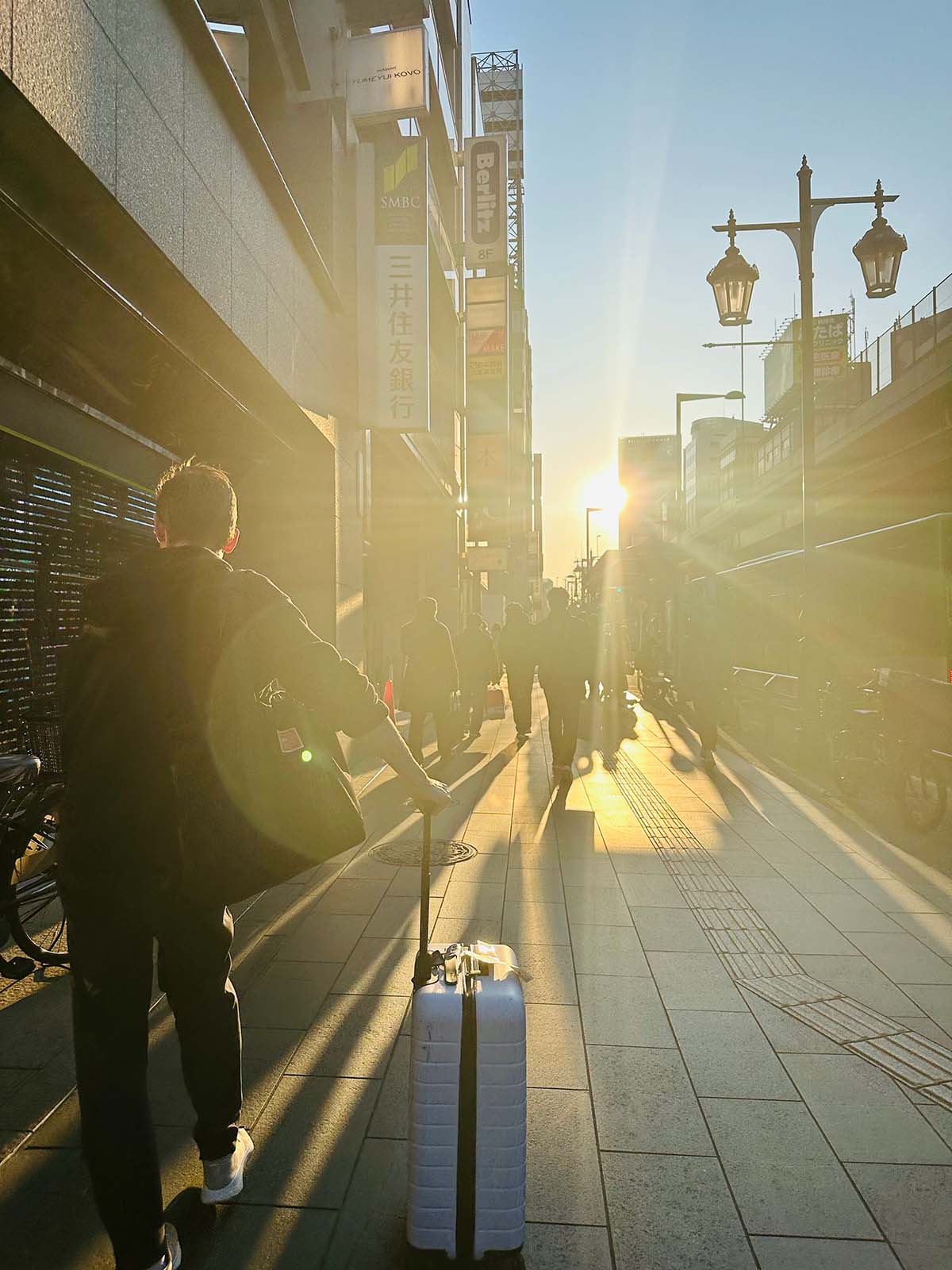
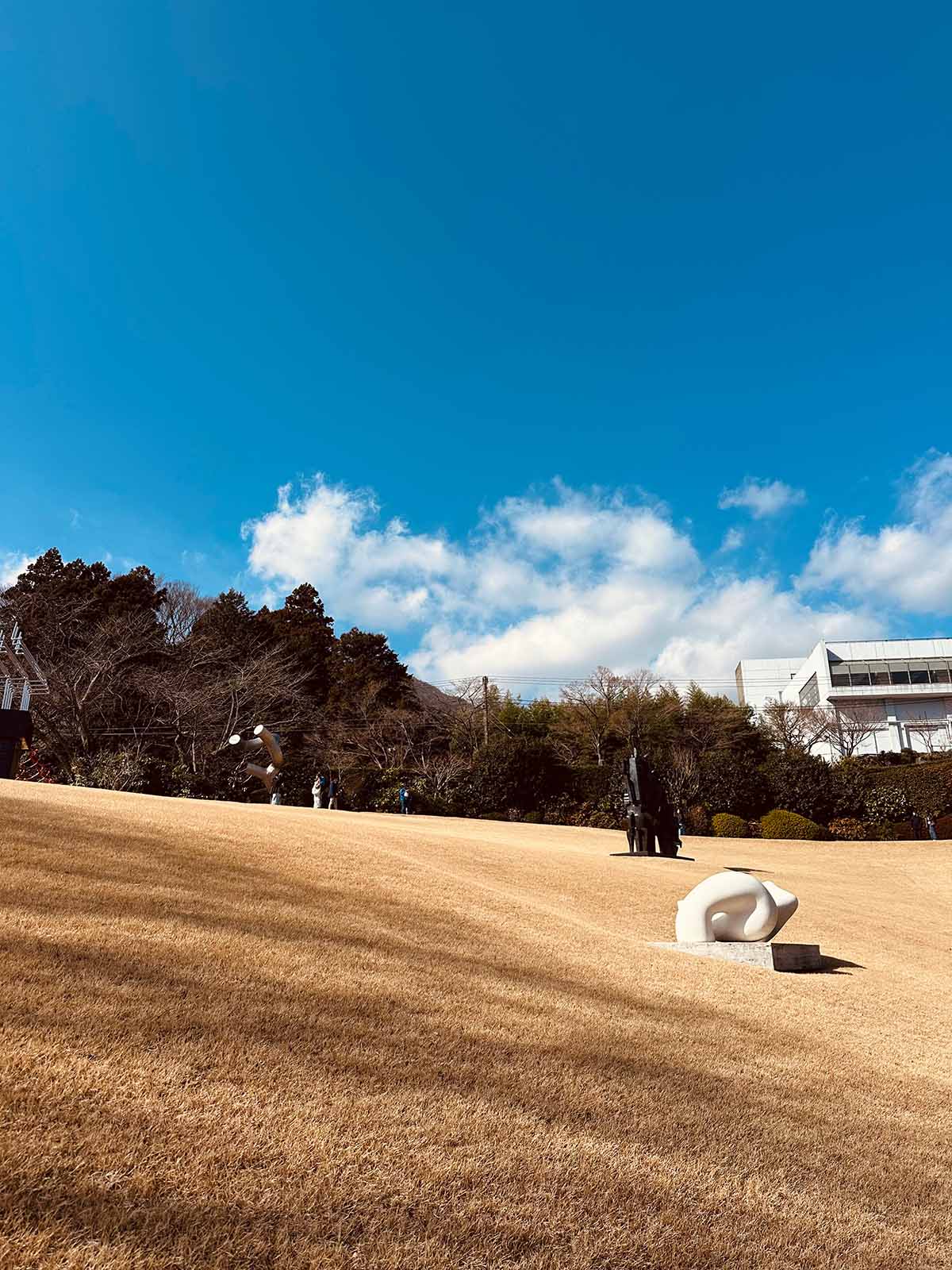
I was in Tokyo last month, and am so grateful for the respite. It was the first time since 2017 that my husband and I travelled alone without the kids. While I missed them dearly, I do not think they would have enjoyed reading half a novel in a scalding outdoor onsen.
(Also, fairly sure grandpa let them have a soda.)

—
Until next time! If you enjoyed this, hit reply! Or, consider forwarding to a friend or linking via peptalks.ashsmash.com
xo
A